The truth about the Rwandan genocide
- 7 April 2024, 6:00am
- Comments
- Share
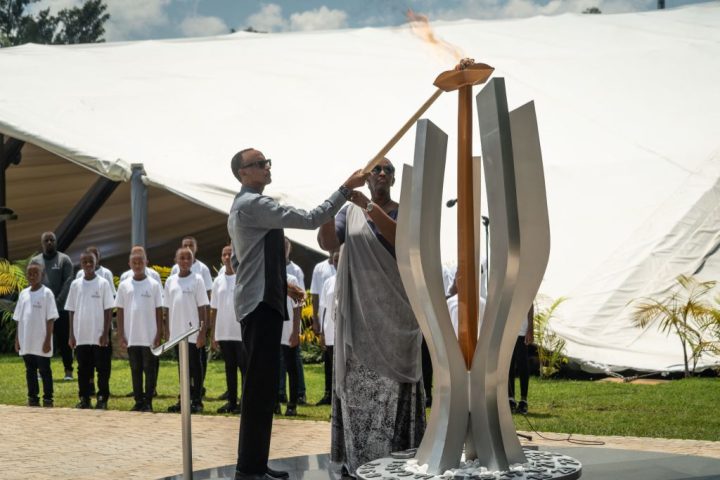
Today a solemn ceremony takes place in Rwanda's capital. President Paul Kagame, flanked by international dignitaries – including our own development secretary Andrew Mitchell – will light a flame of remembrance at Kigali's genocide memorial, where the bones of more than 250,000 people are interred.
'Kwibuka' ('Remember' in Kinyarwanda) – this act of commemoration – happens every April. But this time it's special. It has now been 30 years since the genocide, and is thus an opportunity to assess the tenure of one of Africa's most controversial leaders. Cue a flood of pre-prepared broadcasts, articles and declarations from journalists, politicians and institutions.
The problem is not what the memorial shows, but what it omits
Many will contain a reference to the genocide memorial. Rightly so. The brainchild of James and Stephen Smith – two brothers from the north of England who set up the Aegis Trust, a British charity dedicated to preventing genocide – it's a remarkable site. Almost every tourist who goes there emerges shaken and deeply moved. Every potential investor, diplomat and foreign official – especially those trying to negotiate peace between Rwanda and the neighbouring Democratic Republic of Congo (DRC) – is obliged to make a stop.
I've visited several times over the years and have watched it change. At first its displays were gulp-inducingly graphic: shattered skulls, clothing stained with browning blood. Later, they became less in-your-face. Some of the Rwandan staff had visited Yad Vashem, Israel's official Holocaust memorial site, and clearly picked up tips there on how to make the displays simultaneously less gruesome and more poignant.
There's a commendable determination to remember the slaughtered men, women and children as individuals, rather than anonymous numbers. 'The last display is a children's room, with photos of the children who died,' a recently-returned friend told me. 'It's incredibly powerful. I came out with tears streaming down my face.'

I used to be a fan, but no longer. For the Smith brothers' well-intentioned project has become part and parcel of Rwanda's problem, it seems to me. It has served to airbrush an inconvenient history, cementing in place a government narrative which actively undermines Rwanda's professed commitment to reconciling majority Hutus and minority Tutsis.
The problem is not what the memorial shows, but what it omits. Quite correctly, it remembers the hundreds of thousands of Tutsis who were macheted, shot and clubbed to death by Hutu extremist militias and army soldiers in schools, churches and at checkpoints after President Juvenal Habyarimana's plane was shot out of the sky on 6 April 1994.
But that's only part of Rwanda's story, and there's the rub. Little time at the memorial is wasted on the build-up to the genocide, when Kagame's Tutsi-dominated Rwandan Patriotic Front (RPF) invaded from Uganda and swept south, ethnically cleansing the population as it moved.
Predictably, there's no mention of the Kibeho massacre of 1995, when Kagame's troops shot dead around 8,000 displaced Hutus under the eyes of UN peacekeepers. The slaughter in 1996 and 1997 of tens of thousands of Hutu refugees who had fled into the DRC – massacres carefully documented by the UN – don't feature, either.
Kagame needs relations between Hutus and Tutsis to remain toxic, poisoned by mutual suspicion
Staff would no doubt argue that these things happened after the memorial's chosen cut-off point. But the glossing over of Rwanda's civil war means the genocide appears to come out of nowhere, a bolt from the blue. Context is all, and here context is missing.
These are taboo topics in modern Rwanda, where Kagame, who has been in power since 2000, always posits himself as 'the man who stopped the killing'. After Hutu opposition leader Victoire Ingabire, returning from exile, drew attention to this lacuna in 2010, she was rewarded with eight years in jail for terrorism and 'genocide denial'. She is now barred from running in this year's elections, making them a shoo-in for Kagame.
Ingabire is not the only person jailed for insisting that the RPF, too, has blood on its hands. As Human Rights Watch documents, Rwanda's prisons are full of poets, bloggers, citizen journalists and academics whose mistake was to publicly raise the issue of RPF past crimes.
Most of these detainees are Hutus, but, surreally, 'genocide denial' is also an accusation made against Tutsis who lost family members during the slaughter. One tragic example was Kizito Mihigo, a gospel singer known as 'the Dove'. He was jailed after questioning the official narrative and talking to exiled opposition party members. Amnestied, he was rearrested while trying to flee the country and died in a police cell in 2020. I don't know many Rwandans who believe he committed suicide – the official version given by the authorities.
These are individual examples, but they take place against a wider backdrop of ethnically-skewed blame and punishment. After the genocide, when its prisons were crammed to bursting point with suspected killers, Rwanda experimented with a form of grassroots justice called 'Gacaca', in which villagers tried and sentenced their neighbours. It was a practical way of dealing with an intractable problem. While Gacaca dealt with perpetrators low down in the administrative and army echelons, an international tribunal in Arusha, Tanzania, simultaneously tried Habyarimana's top militia commanders, government officials and generals, the men who ordered the killings.
But this, too, has not been even-handed. Crimes committed by RPF officers and soldiers barely featured during Gacaca. The same went for the Arusha tribunal process. In both cases, those prosecuted were overwhelmingly Hutus.
Justice in post-conflict societies is always a rough and ready affair. In Europe after the Second World War, former Resistance fighters often found themselves living next door to Fascist collaborators who had either got off scot free or served the lightest of sentences. While Hitler's henchmen were hanged at Nuremberg, Churchill never had to answer for the bombing of Dresden.
Yet justice biased in the victor's favour is not just repugnant, but positively risky when the community being told it bears collective responsibility for one of the 20th century's worst atrocities, and has its nose constantly rubbed into past crimes in myriad small and petty ways, represents the majority.
This raises the question of whether what Kagame is doing is a clumsy miscalculation, a minority-pleasing blunder, or, in fact, entirely deliberate. Whatever he says when addressing a Western public – and Kagame's message always varies dramatically depending on whether he is speaking English or Kinyarwanda – I believe he needs relations between Hutus and Tutsis to remain toxic, poisoned by mutual suspicion, because that's the foundation on which his rule is premised. If you listen to his speeches and those of his nearest colleagues – particularly those of the pugnacious former defence minister James Kabarebe – you notice how enthusiastically they talk up the 'genocidal forces' raging in DRC, in Hutu refugee camps scattered across southern Africa, and even – supposedly – in Europe.
Rwanda's army is so well trained and armed it is regularly relied on by the West to send peacekeepers to places like Darfur, Central African Republic and Mozambique. Yet if you listen to Rwanda's leadership, you would think it could be toppled at any moment by the FDLR, a militia of ageing genocidaires operating across the border. Analysts estimate that force at just 600 men.
Kagame's support for a Tutsi rebel group – the M23 – laying waste to eastern DRC in recent years hardly sends out a message of ethnic reconciliation, either. The hatred against Congolese Tutsis that he decries is of his own making. As he well knows, nothing polarizes public sentiment like an armed invasion.
Years ago, key members of Rwanda's Tutsi elite – men who have known Kagame since he was a geeky young rebel – decided he had betrayed their movement's founding principles and clung to power far too long. Those dissident Tutsi voices were systematically silenced, with the men concerned either jailed, driven into exile or assassinated abroad.
Having sidelined his former brothers in arms, Kagame can present the contest in Rwanda not as a quarrel over which a member of a Tutsi elite gets to hold ultimate executive power, but as an existential struggle by a beleaguered ethnic minority over which only he can extend a shining, protective shield. By constantly telling his audience they are surrounded by enemies desperate to complete unfinished business, he underlines his own indispensability: 'You may not like me,' reads the message put out by every Rwandan newspaper, radio station and that poignant genocide memorial. 'But I'm the only thing between you and Armageddon.'
As a recipe for presidential survival, it makes sense. As a recipe for domestic and regional stability and peace, it's a disaster.
The Aegis Trust commented: 'Michela Wrong's assertion that the Kigali Genocide Memorial 'actively undermines' Rwanda's commitment to reconciliation overlooks its role as birthplace of peace and values education developed by the Aegis Trust, now built into Rwanda's national schools curriculum. This has led to both Tutsi and Hutu students giving up plans for armed violence, writes Aegis founder Dr James Smith in this response, which addresses Wrong's critique in more detail.'
A blooming good offer
Subscribe to The Spectator this spring and get 3 months for just £3
WRITTEN BY
Michela Wrong________________________________________________________________
-Ushobora kohereza message yawe kuri : rwandaforum@googlegroups.com
-Ushobora kwiyandikisha kuri iyo groupe wandikira: rwandaforum+subscribe@googlegroups.com
-Ushobora kwikura kuri iyo groupe wandikira: rwandaforum+unsubscribe@googlegroups.com
-Contact: rwandaforumonline@gmail.com
____________________________________________________
---
You received this message because you are subscribed to the Google Groups "Rwanda Forum" group.
To unsubscribe from this group and stop receiving emails from it, send an email to rwandaforum+unsubscribe@googlegroups.com.
To view this discussion on the web visit https://groups.google.com/d/msgid/rwandaforum/CAEe4F%3Deq-zZ3t-RMaW-u3%2B-eVgdta%3DzNPqNckT6tSOu3yy42tQ%40mail.gmail.com.
Comments
Post a Comment